Local detail
What Most People Get Wrong
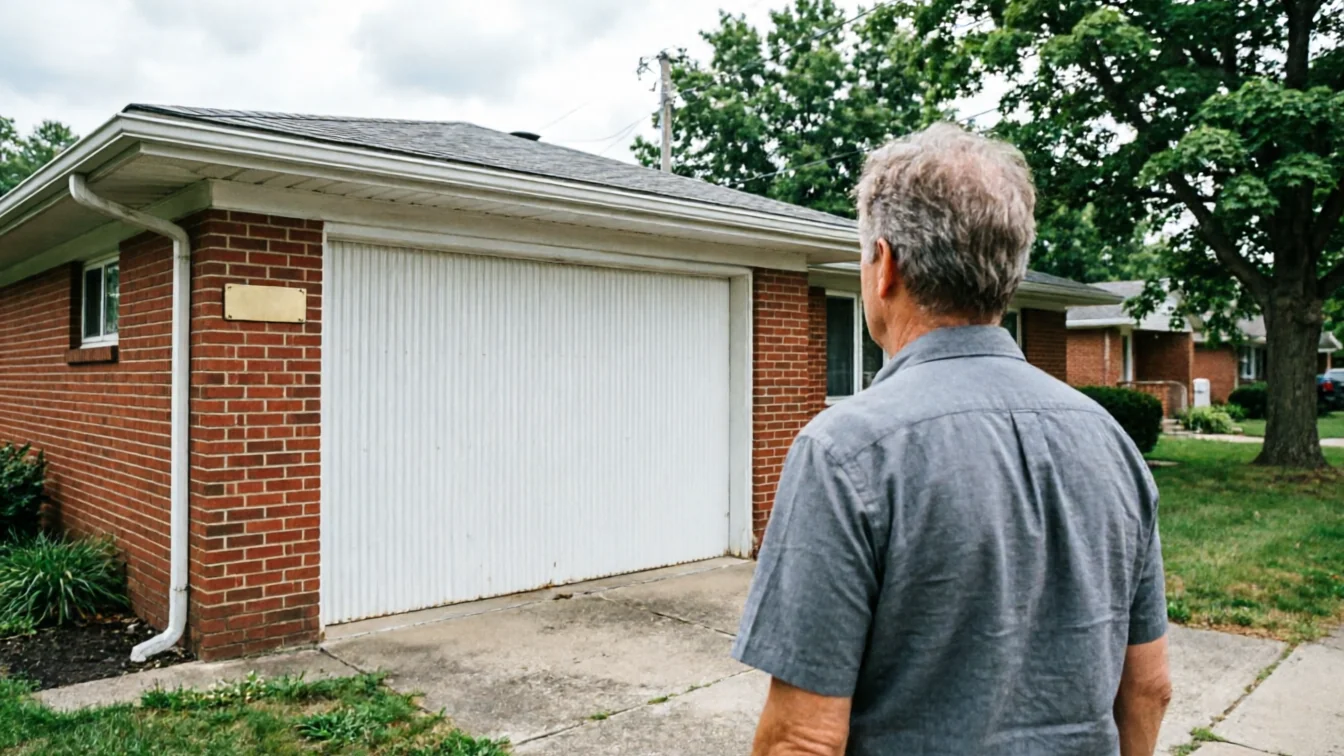
Most homeowners here assume a garage door problem is about the door. In a city where the typical house was built around 1960, it's almost always about the hardware underneath it. Doors on houses built before insulation rules went into effect were hung with steel track and springs sized for a lighter, single-layer panel, not the heavier insulated replacements a lot of owners put in later. When you bolt a heavier door onto 60-year-old track brackets, the lag screws pull loose from studs that have dried and shrunk for decades. People blame the opener. The opener is usually fine.
The other mistake is treating every noisy door the same way. A door from the 1960s-70s era common across this part of the service area (per F2) typically runs on a different spring system than anything installed in the last twenty years. Parts don't interchange. A universal roller kit bought online may not fit the drum size on an original torsion setup, and forcing it on strips the shaft key. If your house falls in that median-1960 build window, get the spring and drum measured before you order anything.
The area
What to Look At First
Start at the brackets, not the panels. On houses built before insulation rules were common, the horizontal track is often lag-bolted straight into original framing with no reinforcing plate. Decades of door cycles work those screws loose, and a sagging bracket shows up as a door that binds a few inches off the floor, not at the top.
Next, check the bottom panel for rust-through at the corners. Garages in this area see road salt tracked in all winter, and older galvanized panels corrode from the inside of the seam outward, so the rust shows at the bottom edge before it shows on the face.
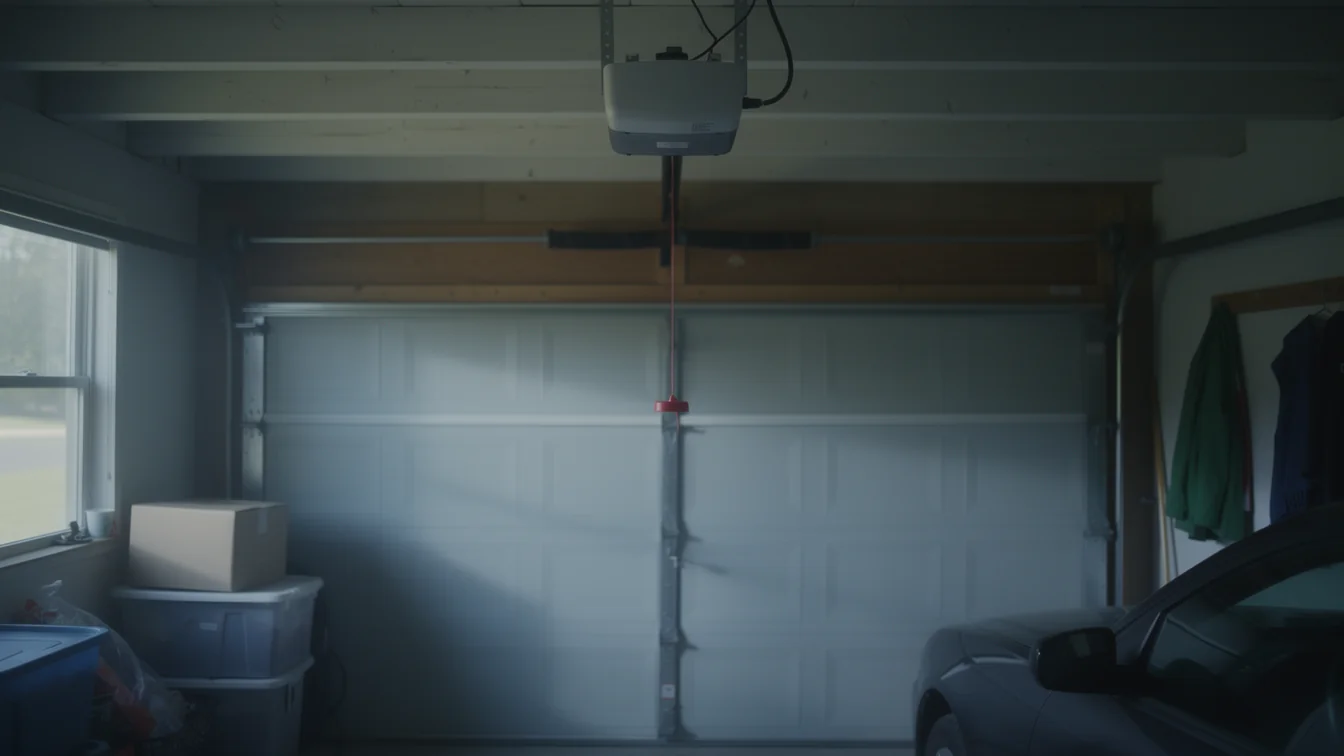
Finally, look at the spring itself. If it's a single long torsion spring mounted over the opening rather than two shorter springs side by side, that's consistent with the older 1938-1991 building stock in this area, and parts for it take longer to source than for a modern two-spring setup. We stock common sizes, but a less common single-spring shaft sometimes means an extra day's wait, which is worth knowing before you're stuck with the door open.
What we find
What the Weather Here Does to It
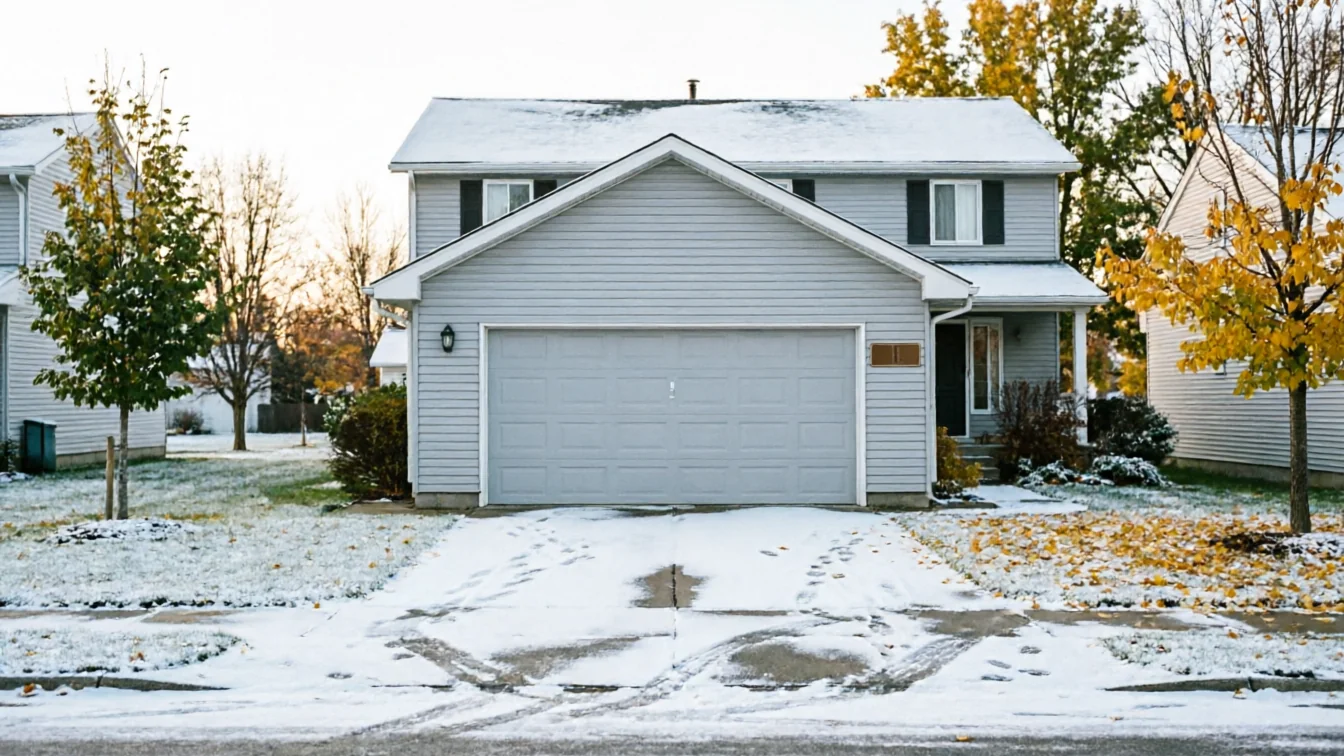
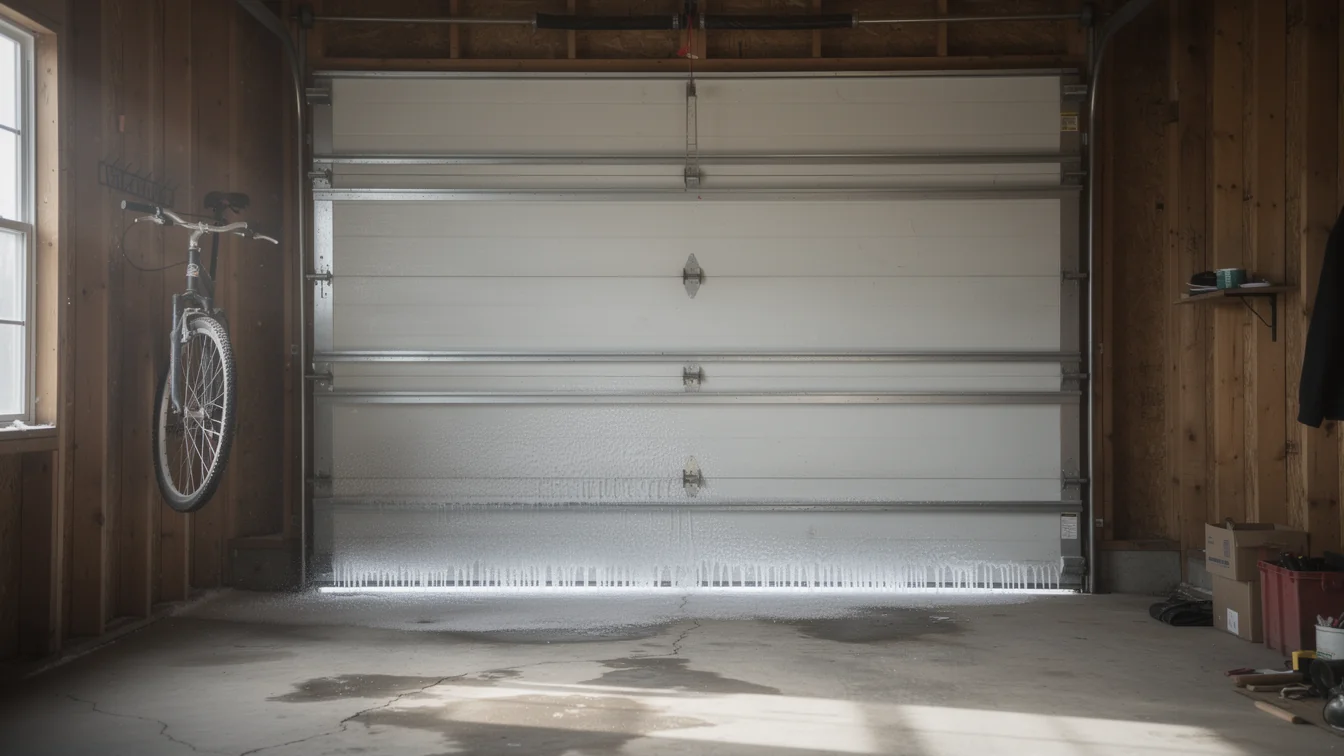
This area sits in a severe cold climate band, and that matters more for older doors than new ones. Steel contracts in deep cold, and on a door with worn weatherstripping the bottom seal pulls away from the slab enough to let wind push under the panel. On a house with an attached garage built in the 1960s, that gap sits right next to a shared wall, and the cold transfers straight through.
Cold also stiffens lubricant on rollers and hinges that haven't been serviced. A door that worked fine in September starts grinding in January because the grease in the roller bearings thickens and the opener has to fight it. That added strain is what snaps a torsion spring that was already near the end of its cycle count, and it tends to happen on the coldest mornings, not gradually.
We don't recommend running a struggling door through a full winter hoping it holds. If the panel's original to a house from the 1938-1991 build era and the spring is original too, the cold will find the weak point before spring does.
How we work
What Is Going On
Across this service area there are roughly 282,446 households and 155,825 owner-occupied houses, a lot of them built in that same mid-century window. That means a large share of the doors we get called out to aren't failing from abuse, they're failing because the hardware has simply reached the end of a decades-long service life at the same time as thousands of similar doors nearby. We're not going to tell you every old door needs full replacement. Plenty of original track and framing is still sound and just needs new rollers, a cable, or a properly sized spring. But if the door was installed before insulation rules existed and the panel itself is bowed or rusted through, patching it costs nearly what a new insulated door does, and you'd still have the old track underneath. That's the one honest trade-off we walk through on every older-home call before we recommend a direction.
Talk to a local pro
Garage door trouble in Westland?
Same-day service with honest, upfront quotes.